
Japan, Unfiltered & Unforgettable: Top experiences across the country, plus your complete 3-day blueprint for Tokyo, Kyoto, and Kanazawa.

Updated: May 19

01 · Culture
KYOTO · YEAR-ROUND
Witness a Traditional Tea Ceremony

The Japanese tea ceremony — chado — is meditation in slow motion. Every movement, every gesture of the host is deliberate. In Kyoto's older machiya townhouses, participating in an authentic ura-senke ceremony (not a tourist demo) gives you 45 minutes of complete, unhurried presence. Book private sessions through licensed tea masters rather than group tourist packages for the real thing.
02 · Nature
MAR–APR · SEASONAL
Hanami — Cherry Blossom Season
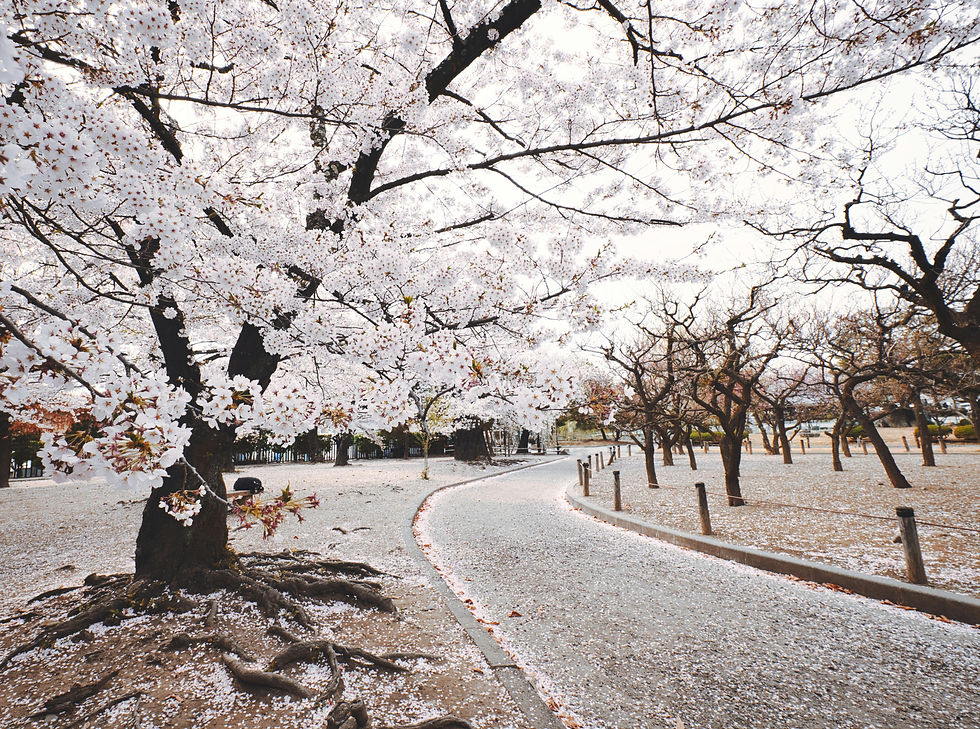
Late March to mid-April transforms Japan into something almost illegally beautiful. Maruyama Park in Kyoto, Shinjuku Gyoen in Tokyo, Hirosaki Castle in Aomori — the sakura peaks differ by latitude, giving you almost three weeks to chase the bloom northward. The weeping cherry at Maruyama at night, lit from below, is one of those rare moments where reality genuinely looks like a painting.
03 · Food
TOKYO · OSAKA · YEAR-ROUND
A Full Omakase Counter Experience

Omakase translates loosely to "I'll leave it to you" — and you should. Sitting at an eight-seat counter while a chef composes 12–18 courses around seasonal ingredients is unlike any dining experience on earth. Many neighbourhood sushi masters in Tokyo's Shinjuku or Osaka's Namba charge ¥8,000–¥15,000 for something genuinely transcendent.
04 · Spiritual
KOYASAN · YEAR-ROUND
Stay Overnight in a Shukubo (Temple Lodging)

Koyasan the mountain monastery complex in Wakayama Prefecture lets you sleep inside a Buddhist temple, wake at 5:30 AM for morning prayers, and eat shojin ryori (ascetic vegan cuisine) for breakfast. One of the most quietly profound nights you'll spend anywhere in Asia. Book through the Koyasan Tourist Association it fills months ahead.
05 · Landscape
KISO VALLEY · APR–NOV
The Nakasendo Trail Between Magome & Tsumago

This 8 km stretch of the old Edo-period post road through the Kiso Valley is genuinely intact no cars, no pylons, just cedar forest, stone paving, and two ridiculously well-preserved post towns at either end. Walk it in 2.5–3 hours and arrange luggage forwarding so you arrive light. It's 18th-century Japan with 21st-century convenience.
06 · Thermal HAKONE · KINOSAKI · YEAR-ROUND
An Onsen Ryokan in Hakone or Kinosaki

A proper night at a ryokan met in yukata, served a kaiseki dinner course, with access to indoor and outdoor rotenburo (open-air baths) is the reset button your nervous system didn't know it needed. Hakone is closest to Tokyo; Kinosaki Onsen has seven public bath-houses to stroll between in your yukata.
07 · Festival KYOTO · JULY
Gion Matsuri — Kyoto's Greatest Street Spectacle

July in Kyoto means Gion Matsuri, Japan's grandest festival and a UNESCO Intangible Cultural Heritage event. The month-long festival peaks on July 17th with the Yamaboko Junko procession enormous decorated floats (some centuries old, some 25 metres tall) rolled through the old streets to percussion and haunting flute music.
08 · Architecture NAOSHIMA · YEAR-ROUND
The Geometric World of Naoshima Island

The Benesse Art Island in the Seto Inland Sea is where Japanese minimalism and contemporary art meet landscape. Tadao Ando's Chichu Art Museum built entirely underground houses three Claude Monet Water Lilies, each in a room designed for that specific painting. A day trip from Okayama or Takamatsu by small ferry.
09 · Seasonal NOV–DEC · SEASONAL
Autumn Koyo — The Red Maple Season

Mid-November through early December brings Japan's second great seasonal spectacle the slow crimson burn of maple leaves across temples and hillsides. Kyoto's Tofukuji and Eikando temples, Nikko's Toshogu complex, and Miyajima's Momijidani park rank among the finest spots. Slightly less crowded than cherry blossom, slightly more serene.
10 · Immersive TOKYO · YEAR-ROUND
A Morning at Tsukiji Outer Market

The inner wholesale tuna auctions moved to Toyosu, but Tsukiji Outer Market still hums with the best tamagoyaki, fresh sea urchin on rice, grilled scallops, and fish-grade knives in one small block. Arrive before 9 AM; many stalls sell out by noon. This isn't tourism it's breakfast as lifestyle.
CITY GUIDE · 3 DAYS
QUICK ANSWER — TOKYO 3-DAY ITINERARY

Day 1: Tsukiji Outer Market (6:30 AM) → Senso-ji Temple Asakusa → Yanaka neighbourhood → Akihabara → Dinner in Ginza.
Day 2: Shinjuku Gyoen → TeamLab Planets → Harajuku & Omotesando → Shibuya Crossing → Golden Gai.
Day 3: Day trip to Nikko (2 hours, ornate Toshogu shrine) or Kamakura (1 hour, Great Buddha + bamboo temples).

Tokyo is 37 million people and a thousand micro-cultures occupying the same grid. Three days is not enough and somehow always enough. Startlingly polite, obsessively well-organised, and quietly addictive.


WHAT TO EAT IN TOKYO
Ramen Ichiran for solo bowls, Fuunji for tsukemen | Sushi Standing counters in Tsukiji for value | Tempura Tendon Tenya chain or Mikawa in Ginza | Yakitori Under the Yurakucho tracks, Hibiya | Tonkatsu Maisen in Omotesando |
CITY GUIDE · 3 DAYS
QUICK ANSWER — KYOTO 3-DAY ITINERARY

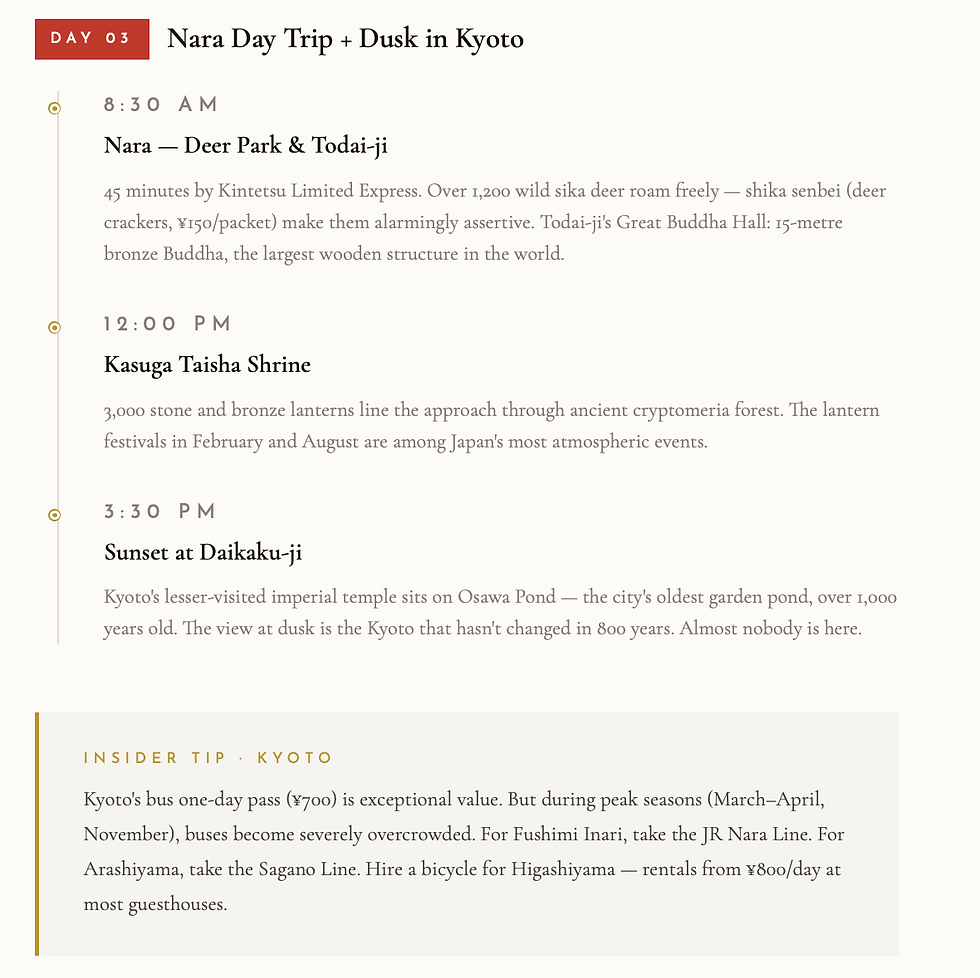
Day 1: Fushimi Inari at dawn (5:30 AM) → Nishiki Market breakfast → Kiyomizudera & Sannenzaka → Gion district at dusk → Pontocho dinner. Day 2: Arashiyama Bamboo Grove (7 AM) → Tenryu-ji Garden → Kinkaku-ji → Ryoan-ji rock garden → Philosopher's Path. Day 3: Day trip to Nara (45 min) for deer park & Todai-ji → back for sunset at Daikaku-ji temple.

Kyoto has 17 UNESCO World Heritage sites in a city of 1.4 million. It was the Imperial capital for over a thousand years. It shows. Every neighbourhood here carries the weight of centuries and wears it lightly.


WHAT TO EAT IN KYOTO
Kaiseki Multi-course seasonal cuisine, Pontocho | Tofu Yudofu near Nanzenji temple | Matcha Uji district, 30 min south by train | Obanzai Kyoto home cooking, local izakayas | Warabi-mochi Fern-starch version here beats everywhere |
CITY GUIDE · 3 DAYS
QUICK ANSWER — IS KANAZAWA WORTH VISITING?

Yes — Kanazawa is one of Japan's most underrated cities. Never bombed in WWII, it preserves intact samurai districts (Nagamachi), geisha quarters (Higashi Chaya-gai), one of Japan's top three gardens (Kenroku-en), exceptional Sea of Japan seafood, and 99% of Japan's gold leaf production. Now just 2.5 hours from Tokyo by Hokuriku Shinkansen.

Kanazawa is the Japan the guidebooks are still catching up to — a castle town that was never bombed, preserving samurai districts, geisha quarters, and canal-laced neighbourhoods in extraordinary condition. And it has arguably better seafood than Tokyo.


WHAT TO EAT IN KANAZAWA
Nodoguro Blackthroat seaperch, a local obsession | Kano-gani Snow crab, Nov-Mar only | Jibu-ni Duck stew with fu, a Kaga delicacy | Kaga Cuisine Richer than Kyoto Kaiseki | Sake Tedorigawa + Kikuhime, both local |
FREQUENTLY ASKED QUESTIONS
Japan Travel FAQ
The questions we get asked most often about planning a Japan trip — answered directly.
What are the top things to do in Japan?
The top things to do in Japan include: a traditional tea ceremony in Kyoto, cherry blossom (hanami) viewing in March–April, an omakase sushi dinner at a neighbourhood counter, overnight temple stay (shukubo) at Koyasan, the Nakasendo Trail between Magome and Tsumago, an onsen ryokan stay in Hakone or Kinosaki, Gion Matsuri festival in July, Naoshima Island's art museums, autumn koyo (red maple) viewing in November, and an early morning at Tsukiji Outer Market.
How many days do you need in Tokyo?
A minimum of 3 days is recommended for Tokyo. Day 1 covers East Tokyo: Tsukiji, Senso-ji in Asakusa, Yanaka, and Akihabara. Day 2 covers West Tokyo: Shinjuku Gyoen, TeamLab, Harajuku, and Shibuya Crossing. Day 3 works best as a day trip to Nikko (2 hours) or Kamakura (1 hour). With 5 days you can explore deeper neighbourhoods and add Hakone.
What is the best time to visit Kyoto?
The best times to visit Kyoto are spring (late March to mid-April) for cherry blossoms and autumn (mid-November to early December) for red maple foliage. Both are extremely crowded — book accommodation 3 to 4 months in advance. For smaller crowds, late May or October offer pleasant weather without peak-season pressure. Avoid Golden Week (late April–early May) and Obon (mid-August).
Is Kanazawa worth visiting?
Yes, absolutely. Kanazawa was never bombed in WWII, preserving intact samurai districts, geisha quarters, and one of Japan's top three gardens. It produces 99% of Japan's gold leaf, has exceptional seafood from the Sea of Japan, and is now just 2h 28m from Tokyo on the Hokuriku Shinkansen. Most international tourists still skip it — which is precisely why you should go.
What should I not miss in Kyoto?
In Kyoto, do not miss: Fushimi Inari-Taisha before 7 AM, Arashiyama Bamboo Grove before 8 AM, Kinkaku-ji (Golden Pavilion), Ryoan-ji rock garden, Gion district at dusk to spot geiko and maiko, Kiyomizudera temple stage, Nishiki Market for street food, and the Philosopher's Path for a quiet walk. For day trips, Nara (45 minutes) for the deer park and Todai-ji Great Buddha is essential.
What is the best season to visit Japan?
The two best seasons are spring (late March to mid-April) for cherry blossoms, and autumn (mid-October to late November) for red maple foliage. Both offer mild temperatures and Japan's most dramatic landscapes. Winter (December to February) is ideal for onsen ryokan, snow in Kanazawa and Hokkaido, and smaller crowds. Summer brings heat and humidity but vibrant festivals including Kyoto's Gion Matsuri in July.
Plan Your Japan Trip with Global Journeys
Planning Japan well is the difference between a trip that ticks boxes and one that stays with you for years. At Global Journeys, we design Japan itineraries that move at a considered pace combining the cultural depth of Kyoto, the energy of Tokyo, and the quiet moments
that most group tours skip entirely. Reach out to us on WhatsApp: +91 88791 70009
ALSO IN THE JAPAN SERIES
Everything else you need for a well-crafted Japan trip — from where to sleep to how to ride the bullet train.
Ready to start planning? Explore our Japan travel experiences or browse all our curated destinations.


Comments