
India's Top Tiger Safari Destination
- Husain Tinwala

- Jun 8
- 11 min read
Updated: Jun 9
I N T R O D U C T I O N
India's Most Underrated Safari Destination — Right Here at Home

Every year, thousands of Indian travellers board long-haul flights to East Africa in pursuit of the Big Five. Meanwhile, in the forests of Chandrapur district in Maharashtra, one of the world's greatest wildlife experiences quietly goes unnoticed.
Tadoba Andhari Tiger Reserve is Maharashtra's largest and oldest tiger reserve — home to one of the highest tiger densities in India, a thriving population of sloth bears, gaur, leopards, and over 250 bird species. It sits approximately 140 km from Nagpur, reachable in under three hours by road. Yet for most urban Indian travellers, a Tadoba safari remains a well-kept secret.


This Tadoba safari guide is written from the field — from seasons spent understanding which zones perform, which lodges are worth the investment, and what separates a good safari from an extraordinary one. Whether this is your first Tadoba trip or a return visit, this is everything you need to plan it properly.

P L A N N I N G Y O U R V I S I T
Best Time to Visit Tadoba Andhari Tiger Reserve
The best time to visit Tadoba for tiger sightings is March to May — but the full picture is more nuanced than that. The park is open from October through June, and the experience changes significantly depending on the season. Getting this right shapes which zone to book, how many safaris to plan, and what you can realistically expect to see.

Morning vs Evening Safari at Tadoba: Which is Better?
Both morning and evening safaris at Tadoba have real merit — and the right answer changes with the season. In summer (March–May), animals move early to beat the heat, making morning safaris typically stronger for tiger sightings. In winter (October–February), animals remain active longer into the day and evening drives can be equally or more productive. Tiger sightings differ every season based on territory shifts, animal movement patterns, and mating cycles — making it genuinely difficult to predict which drive will deliver. The honest answer is that sightings are largely a matter of being in the right place at the right time.
Morning safaris at Tadoba generally run longer than evening drives and come with a highlight that most travellers don't expect — a picnic breakfast served at designated clearing zones inside the forest. Every zone in Tadoba has dedicated picnic areas with basic washroom facilities, making the morning drive a full jungle experience rather than just a sighting mission.
The most important piece of advice: do not limit yourself to one safari per day. A minimum of four drives across your stay meaningfully improves your sighting chances. Our network of guides, boots-on-ground experience across seasons, and real-time zone intelligence exist precisely to give you the best probability of a beautiful tiger tracking safari because while luck plays a role, preparation narrows the gap considerably.


L O G I S T I C S
Getting to Tadoba from Nagpur: Routes, Distance & Transfers
The nearest major airport to Tadoba Andhari Tiger Reserve is Dr. Babasaheb Ambedkar International Airport, Nagpur (IATA: NAG). Nagpur has direct flights from Mumbai, Delhi, Hyderabad, and Bangalore. From the airport, Tadoba is accessible by road drive time varies depending on your entry gate.
✈️
By Air to Nagpur
Direct flights from Mumbai (~1 hr), Delhi (~1.5 hrs), Hyderabad (~1 hr), Bangalore (~1.5 hrs). Global Journeys arranges private transfers from Nagpur airport directly to your lodge.
🚗
Nagpur to Moharli Gate
Approx. 140 km via Chandrapur Road. Drive time: 2.5–3 hours. Primary entry for the Moharli and Khutwanda core zones. The most concentrated area for luxury lodges in the Tadoba region.
🚗
Nagpur to Kolara Gate
Approx. 160 km. Drive time: 3–3.5 hours. Entry to the Kolara core zone — consistently one of the most productive areas for tiger sightings in Tadoba Andhari Tiger Reserve.
🚗
Nagpur to Navegaon Gate
Approx. 150 km. Drive time: 2.5–3 hours. Entry to the Navegaon core zone in the northern part of the reserve — a productive area particularly during winter months.
🚗
Nagpur to Pangdi Gate
Approx. 175–180 km. Drive time: 3.5–4 hours. Entry to the Pangdi and Zari zones in the remote southern sector — the most untouched and wild part of Tadoba. Worth the extra drive time.
🚂
By Train
Chandrapur is the nearest major railhead (~45 km from the park). Nagpur is preferred for most travellers given significantly better flight, train connectivity and road transfer options.

S A F A R I S Z O N E S
Tadoba Safari Zones Explained: Core vs Buffer
Understanding Tadoba's zone structure is the single most important planning decision for a Tadoba safari. The reserve is divided into Core and Buffer zones, each with multiple entry gates spread across geographically separate parts of the forest. Choosing the wrong zone or attempting to switch zones mid-trip is the most common and costly mistake travellers make.


This is why Global Journeys maintains active guide connections inside Tadoba across every season. Before each visit, we consult with naturalists on current animal movement patterns and plan your zone accordingly. It is one of the most meaningful advantages of a curated Tadoba safari over a self-booked one.
B I O D I V E R S I T Y
Wildlife at Tadoba Andhari Tiger Reserve: What You Will See

A Tadoba safari is rightly associated with the Royal Bengal Tiger but reducing this reserve to a single species misses the full picture. Tadoba is one of the most biodiverse forests in central India, offering wildlife encounters that rival any destination on the subcontinent.
A P E X P R E D A T O R
Royal Bengal Tiger

Among the highest tiger densities in India. Multiple sightings in a single day are not uncommon during peak season. Each tiger in Tadoba is individually named and tracked. Tadoba's resident tigers include Xylo, Junabai, Chandni, Chhota Matka, Bela, Veera, Pushpa, Yuvraj, Bijli, Joga, Babli and many more. Spotting a named tiger is one of the reserve's most memorable experiences.
R A R E E N C O U N T E R
Sloth Bear

Tadoba is considered one of the best places in India to spot a sloth bear in the wild. Nocturnal and elusive — a daytime sighting is a genuine privilege.
I N D I A N B I S O N
Gaur

The largest wild bovine species on earth. Tadoba holds them in strong numbers. Their presence beside a waterhole at golden hour is one of the reserve's defining sights.
E L U S I V E C A T Leopard
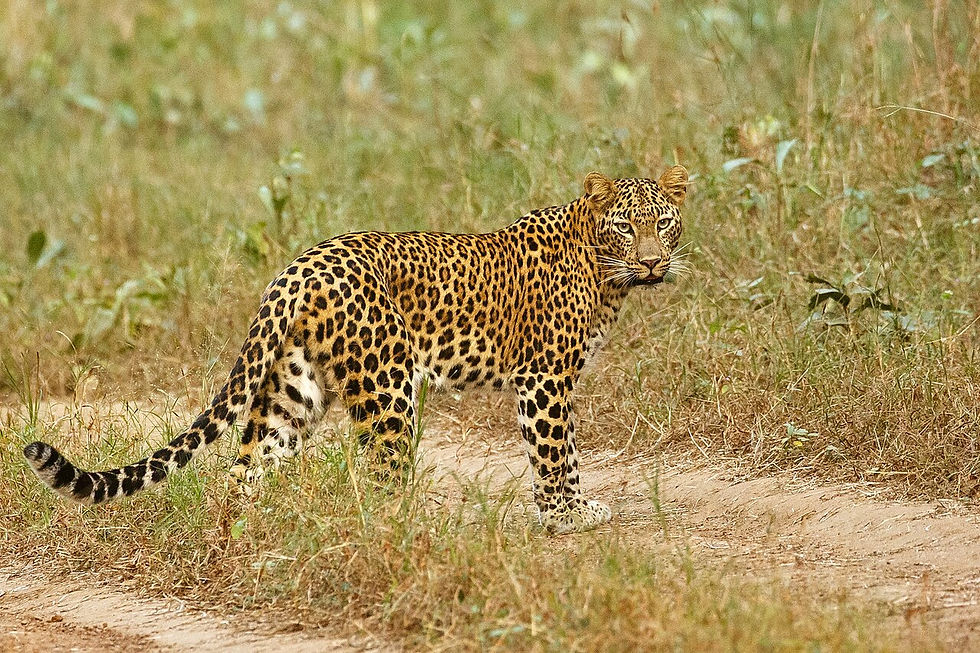
Present throughout the reserve but significantly harder to spot than tigers. Most active at dawn and dusk and entirely worth the patience required.
D H O L E P A C K S Wild Dog
India's most efficient pack predator. The buffer zones of Tadoba are often the best areas to find dhole packs actively hunting or moving through the forest.
F O R E S T F O R A G E R
Wild Boar

Found throughout Tadoba in large sounders. A constant presence in the undergrowth and a key prey species that draws predators into open ground, often signalling larger sightings nearby.
N O C T U R N A L R A R I T Y
Civet Cat
The Indian Common Palm Civet is one of Tadoba's more elusive residents. Rarely spotted on daytime drives — a sighting during an early morning safari is considered a genuine bonus.
A V I F A U N A 250+ Bird Species
Indian Roller, Crested Serpent Eagle, Malabar Pied Hornbill, owls at dusk, Grey-headed Fish Eagle over Irai Lake. A serious birder's reserve alongside its tiger credentials.



W H E R E T O S T A Y
Best Luxury Lodges at Tadoba — Global Journeys Recommends
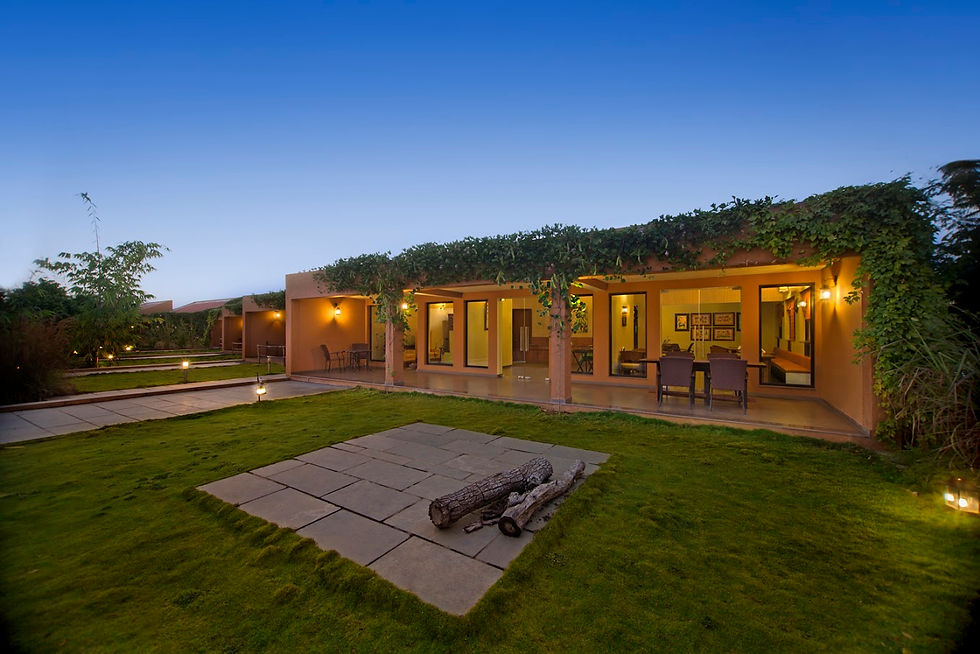
Lodge selection at Tadoba is more than a comfort decision — it is a safari decision. Proximity to your entry gate, quality of in-house naturalists, and relationships with the field guide network all shape how your time inside the jungle unfolds. These are the properties Global Journeys uses, evaluates, and recommends to its guests.

P R E M I U M P R O P E R T I E S


M I D - R A N G E P R O P E R T I E S — W E L L R E G A R D E D


B E F O R E Y O U G O
Planning Your Tadoba Safari: Permits, Timings and Practical Tips

F R E Q U E N T L Y A S K E D Q U E S T I O N S
Tadoba Safari: Your Questions Answered
These are the questions we receive most often from travellers planning a Tadoba safari from first-timers to those returning for a more considered experience.
All 9 FAQs:
Q1. What is the best time to visit Tadoba Andhari Tiger Reserve?
The best time to visit Tadoba for tiger sightings is March to May. The dry season forces wildlife to concentrate at shrinking water sources, making sightings more frequent and predictable. October to February offers pleasant temperatures and excellent birdwatching with strong evening sightings. The core zone closes entirely from July to September during monsoon.
Q2. Which is the best zone for tiger sightings in Tadoba?
Kolara is consistently one of the most productive core zones for tiger sightings in Tadoba. However, tiger territories shift every season based on prey movement, breeding cycles, and territorial changes meaning no zone can be guaranteed. Buffer zones regularly match or outperform core zones in certain seasons. The key is on-ground guide intelligence about current animal activity, which is exactly what Global Journeys provides before every visit.
Q3. How many days should I spend at Tadoba for a good safari experience?
A minimum of 3 nights and 4 days is recommended. This allows for 4–6 safari drives across morning and evening slots, which significantly improves your wildlife sighting probability. Shorter stays often lead to missed opportunities — tiger sightings at Tadoba are substantially luck-based, and time inside the jungle is your most valuable asset.
Q4. How far is Tadoba from Nagpur and how do I get there?
Tadoba is approximately 140–160 km from Nagpur depending on your entry gate. Moharli Gate is roughly 2.5–3 hours by road. Kolara Gate is approximately 3–3.5 hours. Nagpur has direct flights from Mumbai, Delhi, Hyderabad, and Bangalore. Global Journeys arranges private airport transfers as part of all curated Tadoba packages.
Q5. How do I book Tadoba safari permits?
Safari permits are booked via the official Maharashtra Forest Department portal at mytadoba.org. Core zone permits sell out 3–4 months in advance, and earlier during summer school holidays and long weekends. Global Journeys handles all permit acquisition as part of our curated Tadoba safari packages, ensuring the right zone is secured for the right season.
Q6. What wildlife can I see at Tadoba besides tigers?
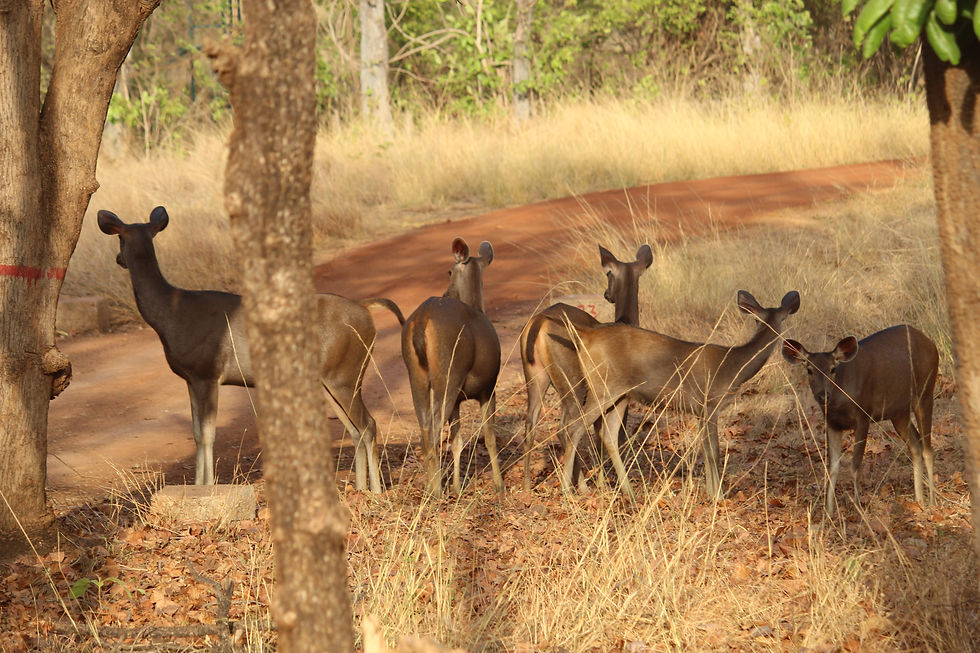
Tadoba is home to sloth bears, gaur (Indian bison), leopards, wild dogs (dholes), spotted deer, sambar, langurs, wild boar, civet cats, marsh crocodiles, and over 250 bird species. It is widely considered one of the best places in India to spot a sloth bear in the wild.
Q7. Which tigers can be spotted at Tadoba Andhari Tiger Reserve?
Tadoba is home to several well-known named tigers including Xylo, Junabai, Chandni, Chhota Matka, Bela, Veera, Pushpa, Yuvraj, Bijli, Joga, and Babli among others. Each tiger holds a known territory within the reserve. A sighting of a named tiger particularly Xylo or Junabai is considered one of the most sought-after wildlife encounters in India. Global Journeys' guide connections help identify which tigers are currently active in which zones before your visit.
Q8. Is Tadoba better than Ranthambore for tiger sightings?
Tadoba rivals and in many seasons surpasses Ranthambore for tiger sighting probability. It also offers a richer overall wildlife experience sloth bear, gaur, wild dog and a significantly less crowded atmosphere. For travellers seeking an authentic jungle safari in India without the commercial crowds, Tadoba is consistently the stronger choice.
Q9. What is the difference between core and buffer zones at Tadoba?
Core zones have controlled access with limited daily permits and are approximately twice the cost of buffer zone safaris. Buffer zones offer accessible permits, lower cost, and consistently exceptional wildlife sightings often rivalling core zones depending on the season. Tiger territories shift seasonally, meaning the best zone changes with every season. Expert zone selection based on current on-ground conditions is what separates a good safari from a great one.

Plan Your Tadoba Safari with Global Journeys
Planning a wildlife safari well is the difference between a trip that feels lucky and one that's quietly, carefully designed to give you everything. At Global Journeys, we curate Tadoba safaris that go beyond permit bookings — matching you to the right zone for the right season, placing you in lodges that put you closest to the jungle, and drawing on guide connections that most travellers simply don't have access to. The difference shows up in the sightings.
Reach out to us on WhatsApp: +91 88791 70009

Comments