
Best Wildlife Lodges and Hidden National Parks in India 2026

Updated: May 1
India’s wildlife is not just tigers. That is both the misconception and the opportunity. The famous parks — Corbett, Ranthambore, Kanha, Bandhavgarh draw the crowds and the camera crews for good reason. But the country has 55 tiger reserves, over 100 national parks, and a range of ecosystems from the Himalayan foothills of Uttarakhand to the mangrove coastline of the Sundarbans, from the granite boulder country of Jawai to the dense moist forests of Arunachal Pradesh that most wildlife travellers never reach.
This guide does two things: it introduces the best wildlife lodges in India worth staying at for a genuine, considered wildlife experience, and it points beyond the famous circuit to the parks and reserves where the wildlife is exceptional, the crowds are absent, and the quality of the experience is often significantly higher than at more celebrated destinations.

Best Wildlife Lodges in India: Our Top 10 for 2026
The best wildlife lodges in India place you at the edge of the forest close enough to hear the jungle at night, comfortable enough to want to stay longer
Diphlu River Lodge, Kaziranga (from Rs 10,000/night): Perched on the periphery of Kaziranga National Park in Assam, this is one of the finest examples of responsible tourism accommodation in India. All cottages and common areas are built from natural bamboo and wood, there is no fencing around the property by design, and the lodge blends seamlessly into its surroundings. Kaziranga is the best place in the world to see the Indian one-horned rhinoceros, and the park’s elephant and jeep safaris are extraordinary. Doubles from Rs 10,000 per night.
Treehouse Hideaway, Bandhavgarh (from Rs 15,000/night): Five treehouses spread across 21 acres of forest adjacent to Bandhavgarh Tiger Reserve. The exclusivity here is genuine — five rooms on 21 acres, with a philosophy that prioritises the forest experience over facilities. Bandhavgarh has the highest tiger density of any park on this list, and the combination of the forest location and the treehouse perspective is unlike any standard lodge stay.
Sujan Jawai, Jawai (from Rs 65,000/night): The premium option on this list, and worth every rupee for the right traveller. Set amid billion-year-old granite rock formations in Rajasthan where leopards coexist with local shepherd communities in an extraordinary arrangement that has no parallel elsewhere in India. The camp is beautifully designed, the leopard sightings are among the most reliable in the country, and the landscape at sunset has a quality that photographers return for repeatedly.
Oberoi Vanyavilas, Ranthambore (from Rs 40,000/night): The benchmark luxury safari property in India. Ten minutes from Ranthambhore National Park, with enormous khaki tents furnished with four-poster beds, Victorian baths, and planter chairs. The service is polished without being intrusive, the food is exceptional, and the tiger safari operation is managed with the serious attention that a Rs 40,000-a-night rate demands. If budget is not the primary constraint, this is where to go for a North India tiger safari.
Evolve Back Kabini, Karnataka (from Rs 20,000/night): Set on the Kabini River in Karnataka, bordered on two sides by water and inspired by the tribal Kadu Kuruba architecture of the region. Kabini offers jeep and boat safaris into the Nagarhole Tiger Reserve, with exceptional elephant sightings and regular leopard activity. The pool villas here are outstanding.
Forsyth Lodge, Satpura (from Rs 20,000/night): Set on 44 acres of scrubland at the edge of Satpura National Park in Madhya Pradesh — one of the most underrated tiger reserves in India. Twelve simple, comfortable cottages built using traditional mud and cob methods, each with a veranda and plantation chairs. Satpura is famous for its sloth bears, its night safaris (unusual among Indian parks), and its boat safaris on the Denwa River.
Bamboo Forest Safari Lodge, Tadoba (from Rs 20,000/night): Set adjacent to Tadoba-Andhari Tiger Reserve in Maharashtra, one of the most reliable parks in India for extended, unhurried tiger sightings. The lodge’s philosophy of luxury coexisting with nature is carried through in every detail, and the Tadoba location means tiger sightings are among the most reliable in the country.
Samode Safari Lodge, Bandhavgarh (from Rs 20,000/night): Twelve independent villas in a beautifully designed property steeped in Indian regal tradition. Large fireplaces, a wooden deck, and an open-air swimming pool in a setting that makes returning from a morning safari feel genuinely pleasurable. Bandhavgarh’s tiger density makes this a reliable choice for sightings.
Blackbuck Lodge, Velavadar, Gujarat (from Rs 15,000/night): One of the most unusual wildlife stays in India, set inside Velavadar National Park in Gujarat home to one of the largest blackbuck herds in the world, alongside wolves, hyenas, and exceptional raptor populations. The blackbuck venture close to the cottages at dusk. This is not a tiger park it is something rarer and more specific, for the traveller who wants wildlife that very few people see.
Wild Planet Devala, Western Ghats (from Rs 9,000/night): A tropical retreat in the Western Ghats of Tamil Nadu where uncompromising eco-adventure meets unexpected comfort. 4x4 jeep safaris and coracle rides through the surrounding forests are exceptional. One of the most affordable lodges on this list with one of the most striking locations.
5 Hidden National Parks for Wildlife Holidays in India
India’s lesser-known parks offer something the famous reserves increasingly cannot space, silence, and a sense of the forest that crowds make impossible
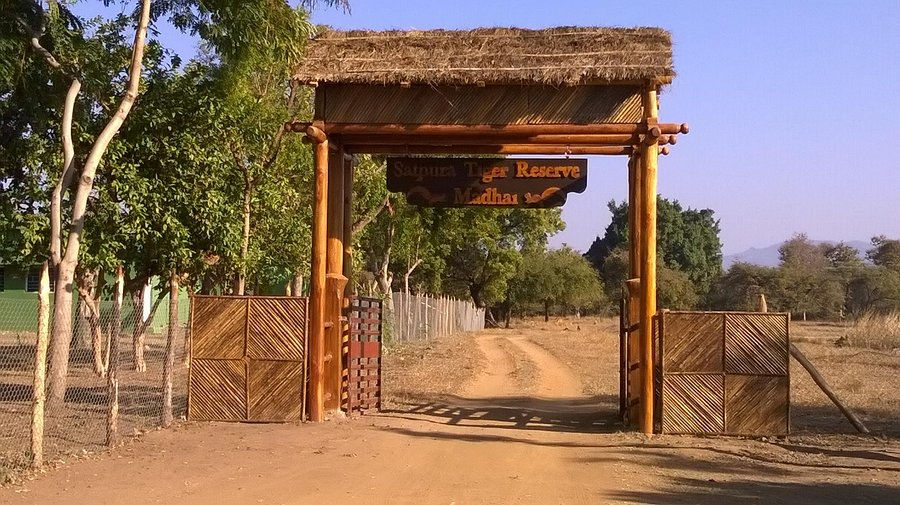
Satpura Tiger Reserve, Madhya Pradesh — The Hidden Gem of Central India
Often overlooked in favour of its more famous neighbours Kanha and Bandhavgarh, Satpura is our top recommendation for the discerning wildlife traveller who wants the full Indian forest experience without the jeep traffic that follows every sighting at the famous parks. The park is known for tigers, a healthy population of sloth bears (one of the best places in India to see them), night safaris, and boat safaris on the Denwa River. The landscape dense jungle, ravines, wetlands, and the rolling Satpura hills is some of the most beautiful in central India. Best time: November to June.

Jawai Conservation Reserve, Rajasthan — The Leopard’s Lair
Jawai has one of the highest leopard densities of any reserve in India, and the extraordinary story of human-wildlife coexistence that has persisted here for centuries
Hidden in plain sight in southern Rajasthan near Bera, Jawai Conservation Reserve is one of the most compelling wildlife destinations in India. A considerable population of leopards live among the billion-year-old granite rock formations, coexisting peacefully with the local Rabari shepherd community in an arrangement that has persisted for centuries without conflict. Open jeep safaris in this semi-arid landscape offer some of the most reliable and unhurried leopard sightings in the country. Best time: October to March.
Dudhwa Tiger Reserve, Uttar Pradesh — The Terai Wilderness
On the Indo-Nepal border in Uttar Pradesh, Dudhwa protects some of the last remaining Terai forests — among the most endangered ecosystems on Earth. Home to the Royal Bengal tiger, the endangered Barasingha (hard ground swamp deer), the Bengal Florican, and a growing population of one-horned rhinoceros. The sal forests here have an ethereal quality in the morning mist that no photograph captures accurately. Very few tourists mean that a sighting here feels genuinely remote and earned. Best time: November to May.

Namdapha National Park, Arunachal Pradesh — An Explorer’s Destination
India’s wildlife parks range from the accessible to the genuinely remote Namdapha in Arunachal Pradesh is the latter, rewarding travellers willing to make the journey
With 2,000 sq km of dense forest in far-eastern Arunachal Pradesh, Namdapha is one of the most biodiverse parks in the world the only park in India with all four big cats (tiger, leopard, clouded leopard, snow leopard), around 500 recorded bird species, red pandas, hoolock gibbons, and habitats ranging from tropical lowland to Himalayan alpine. It is a long way from anywhere, accessible only by road from Dibrugarh in Assam. A 3 or 5-day jungle trek into the park’s interior rewards properly prepared travellers with an experience that has no equivalent in India. Best time: November to March.
Desert National Park, Jaisalmer — The Bustard’s Last Stronghold
India’s largest national park in area and one of its least visited, Desert National Park in Jaisalmer protects one of the world’s last remaining populations of the Great Indian Bustard one of the heaviest flying birds on Earth and critically endangered. Beyond the Bustard, the park’s sand dunes, dry scrubland, and fossil deposits host desert foxes, spiny-tailed lizards, and a remarkable variety of migratory and resident birds. The landscape at sunset has the quality of a Mughal miniature. Best time: October to March, easily combined with a Jaisalmer Fort and desert camp visit.

How to Choose the Right Wildlife Lodge in India
The vehicle, the guide, and the zone permit matter as much as the lodge itself a wildlife holiday is only as good as the quality of the safaris it includes
Proximity to the park gate matters more than most travellers realise. The first and last light are the best times for wildlife, and losing 30 minutes to a transfer from a distant hotel means missing the most active period of the day. Always ask how far the lodge is from the park entrance and what the transfer arrangement is.
Understand what is included in the rate. The best lodges include all meals, game drives, park entry fees, and a naturalist guide in their per-night rate. Hidden extras park entry fees billed separately, guides charged additionally can add significantly to the final cost. A lodge at Rs 15,000 all-in is often better value than one at Rs 10,000 with Rs 8,000 in additional fees per safari.
The quality of the naturalist guide defines the experience. The best lodges employ naturalists who have spent years in that specific forest and bring a depth of ecological knowledge that transforms what you see. Always ask about the guides before booking. A good guide at an average lodge will outperform a poor guide at a luxury one.
Frequently Asked Questions — Wildlife Holidays in India
What is the best time for wildlife holidays in India? November to June covers most parks, with March to May being the peak season when dry conditions concentrate wildlife around water sources. Some parks close during the monsoon (July to September).
Which Indian national park has the best wildlife sightings? For tigers: Bandhavgarh and Tadoba. For leopards: Jawai. For rhinos: Kaziranga. For overall diversity in a less-visited park: Satpura. For a truly remote experience: Namdapha.
How much do wildlife lodges in India cost? Ranges from Rs 9,000 per night at eco properties like Wild Planet to Rs 65,000 per night at premium properties like Sujan Jawai. Mid-range lodges between Rs 15,000 and Rs 25,000 per night offer excellent wildlife experiences without the top-end price.
Should I book safaris through the lodge or independently? Through the lodge. Good lodges have pre-booked core zone permits, employ experienced naturalists, and manage the timing to maximise wildlife activity. Independent bookings risk buffer zone permits and inexperienced guides.

Plan Your Wildlife Holiday in India with Global Journeys
From treehouses in Bandhavgarh to leopard camps in Jawai — the right lodge transforms a wildlife trip into something genuinely memorable
We have been arranging wildlife holidays in India for over a decade. Our knowledge is specific: we know which zones to book at which parks, which guides are worth requesting, which lodges overstate their wildlife credentials and which ones quietly deliver extraordinary experiences. We design wildlife itineraries for all types of travellers first-time wildlife visitors, serious birders, photographers with specific species targets, and families looking for a wildlife experience that works for children as well as adults.
Reach us on WhatsApp: +91 88791 70009 or write to indianjourneys01@gmail.com


Comments